Overview
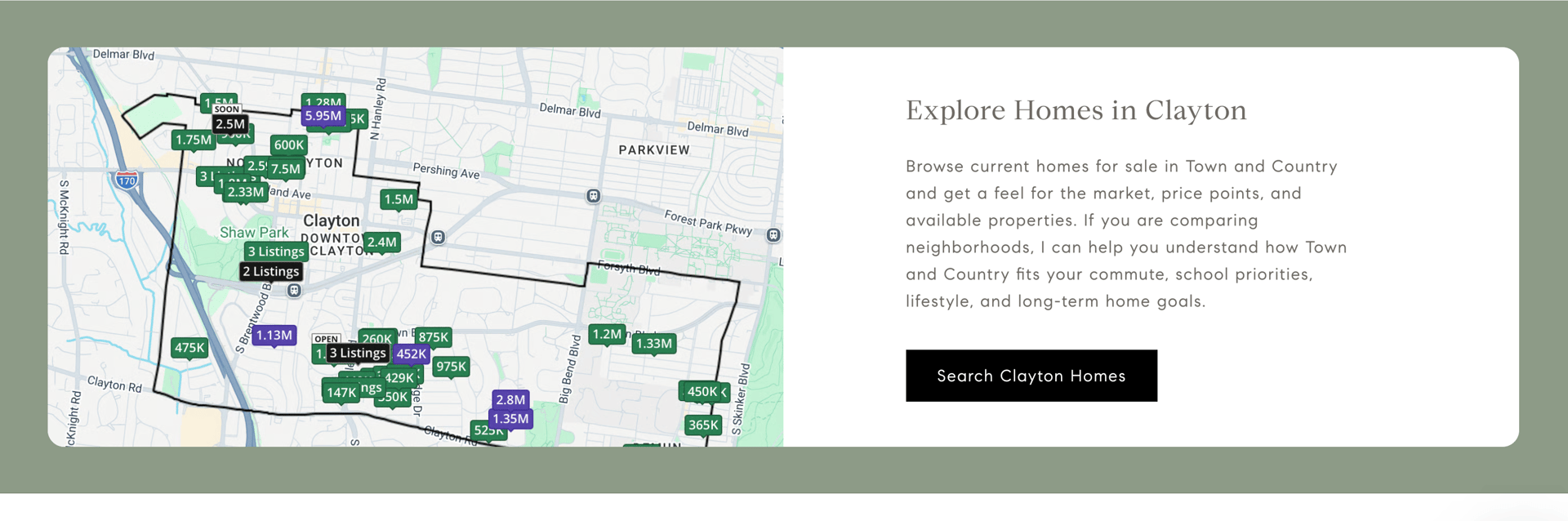
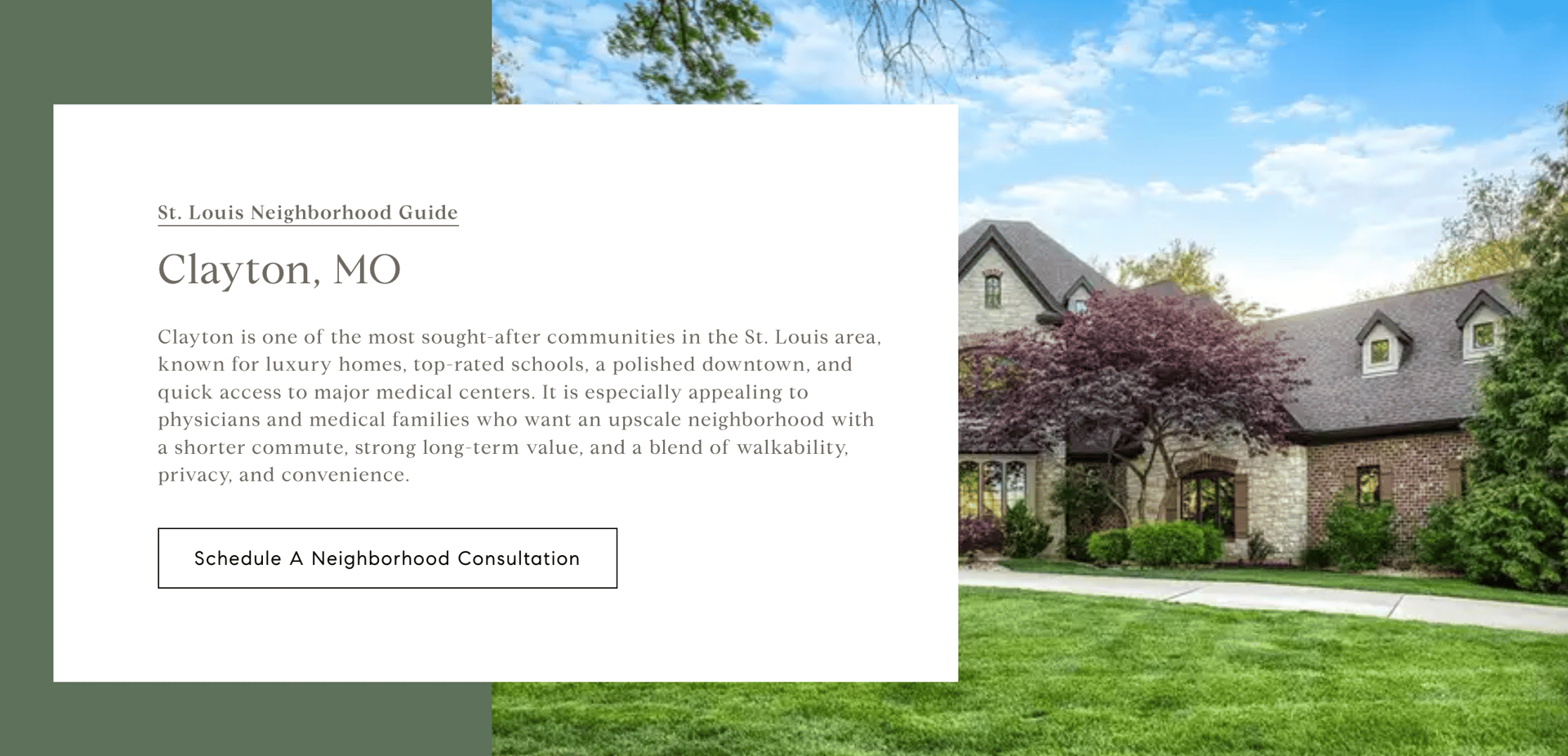
Clayton is one of the premier communities in the St. Louis area, offering a blend of luxury housing, walkability, strong schools, and a highly convenient central location. Buyers are often drawn to Clayton for its polished feel, established neighborhoods, vibrant business district, and easy access to many of the region’s leading medical and employment centers.census+1
Housing
Homes in Clayton range from luxury condos and townhomes to stately older residences and high-end single-family properties on tree-lined streets. The city’s median owner-occupied home value is $799,200, placing it among the most premium housing markets in the region for buyers seeking central location, prestige, and long-term value.census
Best For
Clayton is especially attractive for physicians, executives, and families who want a refined community with strong public schools, a shorter commute to major hospitals, and convenient access to dining, shopping, and professional services. It works particularly well for buyers deciding between urban convenience and classic suburban stability.
Hospital Access
Clayton is well positioned for buyers working at several major hospital systems across the St. Louis area. Barnes-Jewish Hospital is located on the Washington University Medical Campus in the Central West End, while Missouri Baptist Medical Center is at 3015 N. Ballas Road, Mercy Hospital St. Louis is at 615 S. New Ballas Road, and St. Luke’s Hospital is at 232 S. Woods Mill Road in Chesterfield.
Commute Notes
Clayton’s mean travel time to work is 17.3 minutes, which reinforces its reputation as a centrally located option for professionals who want efficient access to both city and county job centers. Commute times will vary by shift and traffic, but Clayton is regularly considered by buyers who want practical access to the Central West End medical campus as well as central and west county hospitals.
Schools
The primary public district is the School District of Clayton, which serves the entire City of Clayton along with portions of nearby areas. The district includes Glenridge Elementary, Meramec Elementary, R.M. Captain Elementary, Wydown Middle, Clayton High, and The Family Center.
Nearby Private Schools
Clayton buyers often also consider nearby private school options in the central corridor and inner county depending on educational goals, commute preferences, and grade level needs. This section can later link directly to your private-school content hub once those pages are built.
Lifestyle
Residents enjoy a highly connected lifestyle with upscale dining, office and retail convenience, nearby parks, and quick access to the broader central corridor. Clayton feels polished, established, and highly livable for buyers who want a community that balances prestige, convenience, and everyday functionality.